
Religious Studies
Aim
To teach our students the correct knowledge about Islam. Students will learn to spread the knowledge of Islam and teach Muslims and non-Muslims about Islam. Students will learn the importance of spreading the Islamic Obligatory Knowledge and supporting it with clear evidence.
In the present time of social decay, raising children is not an easy matter, especially considering that most schools do not place such education as their top priority.
There is no doubt that such education improves the welfare of the children and results in their well being in this life and the life after.
Content
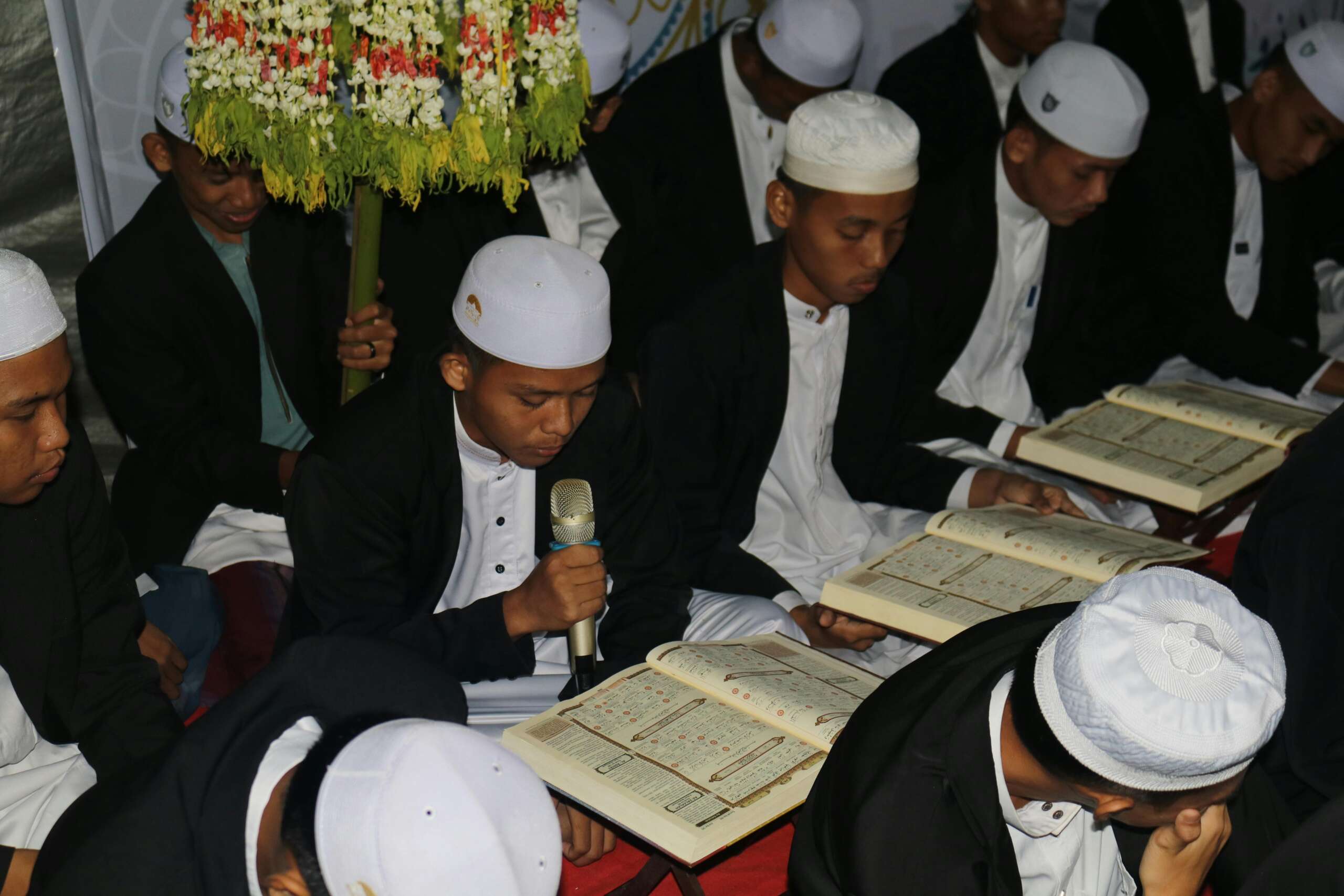
- Students learn to read the Qur’an with the correct rules and pronunciation. They are given lessons on a regular basis and memorise Ayat throughout the two years.
- Students will also learn the Obligatory Knowledge every accountable person is obligated to know. This comprises the Obligatory Knowledge pertaining to belief, issues from Purification (Taharah) up to Pilgrimage (Hajj), and some rules of dealings according to the school (Madhhab) of Imam Ash-Shafi^iyy. The sins of the heart and of other organs, such as the tongue, are also included.
Cultivating Faith, Knowledge & Leadership
At Al Amanah College, our Islamic Studies program is carefully structured to provide students with a comprehensive and well-rounded understanding of Islamic teachings. The curriculum covers Islamic Belief (Aqeedah), Islamic Jurisprudence (Fiqh), Quranic recitation and memorisation, and ethical principles, ensuring that students graduate with both deep religious knowledge and practical application skills.
Through engaging lessons, scholarly texts, and practical learning, we prepare students to navigate modern challenges while staying rooted in the principles of Islam.
Stages of Learning
Our program is progressively structured to develop students’ understanding of Islam at every stage of their schooling.
Stage 4 (Years 7 & 8) – Foundations of Islamic Knowledge
Students begin their studies with Shaykh ^Abdullaah Al-Harariyy’s summary, based on Sullam At-Tawfeeq by Al-Imaam Abdullaah Ibn Husayn Ibn Taahir. This foundational text provides essential teachings in:
- Islamic Belief (Aqeedah) – Understanding core principles of faith.
- Islamic Jurisprudence (Fiqh) – Learning the fundamentals of worship and daily life rulings.
- Quran Recitation & Memorisation – Developing Tajweed proficiency and fluency.
This stage builds a solid foundation in obligatory Islamic knowledge, ensuring students develop a strong grasp of faith and practice.
Stage 6 (Years 11 & 12) – Mastering Islamic Studies & Understanding
Students study As-Siraat (The Straight Path) by Shaykh Abdullaah Al-Harariyy, along with The Creed of At-Tahawiyy by Al-Imaam Abu Ja^far At-Tahawiyy. These advanced texts provide:
- Islamic Creed (Aqeedah) – A deeper exploration of core Islamic beliefs.
- Islamic Law (Fiqh) – Studying Matn Abi Shujaa’, a fundamental text in Shafi^i jurisprudence.
- Islamic Ethics & Leadership – Understanding the role of Muslims in modern society and ethical responsibility.
This stage equips students with advanced knowledge and practical understanding of Islamic rulings, preparing them to be confident, knowledgeable, and morally responsible individuals.
Student Engagement & Practical Learning
We ensure Islamic learning is engaging and interactive by incorporating:
- Quranic Competitions to encourage memorisation and recitation excellence.
- Hadith & Tafsir Studies to deepen understanding of Islamic teachings.
- Community & Leadership Programs to instil responsibility and service.
- Islamic Discussions to develop critical thinking and articulation skills.
These activities reinforce spiritual growth, academic excellence, and strong moral character.
Assessments & Homework
Our assessment approach ensures that students develop both academic knowledge and practical application skills in Islamic studies.
- Formative Assessments
- Summative Assessments
- Practical Assessments
- HSC Islamic Studies Preparation (Stage 6)
Quranic recitation checks, discussions, and analytical exercises.
Exams, research essays, and oral presentations.
Memorisation tests, Tafsir analysis, and ethical case studies.
Focused revision and in-depth study sessions.
Homework is structured to:
- Reinforce learning through reading, memorisation, and reflection.
- Encourage independent research into Islamic history, creed, and jurisprudence.
- Prepare students for assessments by refining critical thinking and reasoning skills.

Supporting Students & Parents
We value strong partnerships between students, teachers, and families to support Islamic learning.
Parent & Student Workshops to encourage discussions on Islamic values and principles.
Quran & Islamic Studies Support Sessions for extra guidance in memorisation and concept mastery.
University & Career Pathways in Islamic Studies to explore opportunities in Islamic scholarship, teaching, and leadership.
Preparing the Next Generation of Ethical & Knowledgeable Leaders
At Al Amanah College, our Islamic Studies Faculty is dedicated to preserving authentic Islamic knowledge, fostering spiritual and academic excellence, and preparing students to lead with faith and integrity.
Through a structured curriculum, scholarly texts, and practical learning experiences, we ensure that students graduate with a deep understanding of their faith, the ability to apply Islamic teachings in daily life, and a strong moral compass to navigate the modern world.